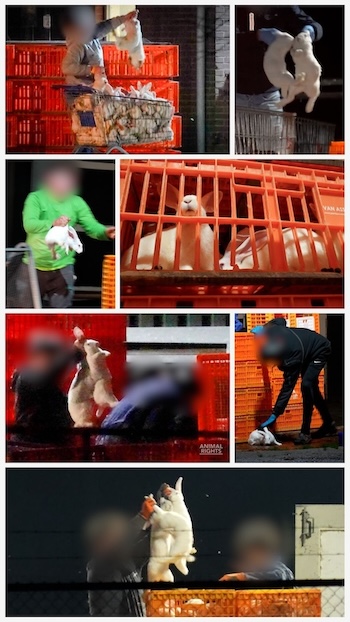
Op 16 april 2026 verscheen er in de locale pers van de Vietnamese provincie Lang Son, in het noorden van Vietnam, niet ver van de Chinese grens, een artikel over investeringen in industriële ontwikkelingen in de regio. 1 Een van de projecten behelst de ‘Van Thanh Export Monkey Farm Project’, uitgevoerd door de ‘Van Thanh Vietnam Investment Joint Stock Company’. Deze apenfokkerij zou gevestigd worden in het dorpje Ban Pat. Het project wil apen fokken op ongeveer 4 hectaren en deze vervolgens exporteren. Het plan behelst een investering van 46.2 miljard Vietnamese Dong, ongeveer anderhalf miljoen euro.
In navolging van onze collega’s van Peta en Abolición Vivisección stuurde Animal Rights een brief aan de Vietnamese autoriteiten met het verzoek om dit project niet door te laten gaan. Het directe belang voor Animal Rights hierbij is dat apenhandelaar Hartelust uit Tilburg apen afkomstig uit Vietnam verhandelt en dat vliegveld Zaventem in Brussel fungeert als de toegangspoort en doorvoerhaven voor Vietnamese apen in Europa.
Zie hieronder de brief voor de argumenten:
May 14, 2026
Nguyễn Hữu Chiến
Director
Department of Agriculture and Environment of Lạng Sơn Province
Via e-mail
Subject: Request for non-approval of proposed Vạn Thành monkey farm project
Dear Director Nguyễn Hữu Chiến,
I write on behalf of Animal Rights Netherlands & Belgium to request that your office withhold approval for the proposed construction and operation of a new long-tailed macaque breeding and export facility, Vạn Thành, in Lạng Sơn Province.
As the Netherlands key animal rights organization, we respectfully submit the following considerations for your review. Taken together, they indicate that the development of an additional macaque breeding and export facility in Lạng Sơn Province would be ill-advised and contrary to public health, wildlife conservation, and longer-term socioeconomic interests.
Public Health and Zoonotic Disease Risk
Long-tailed macaques (Macaca fascicularis) are known reservoirs of multiple zoonotic pathogens capable of causing severe and sometimes fatal disease in humans, including tuberculosis, Herpes B virus, melioidosis, and others. Facilities such as the proposed Vạn Thành farm—where hundreds, if not thousands, of macaques would be housed under poor hygiene and limited biosecurity—would substantially increase the risk of disease spillover and regional outbreaks, threatening local public health.
This is not just a theory. On February 3, 2023, a flight departed from Ho Chi Minh City, Vietnam, with 480 Macaca fascicularis from the Vina Mekong Group facility on board in small wooden crates. The 480 macaques land a day later at Maastricht Airport in the Netherlands and are transported by van to the town of Tilburg, the home base of Dutch monkey trader Hartelust.
After a quarantine periode, Hartelust starts distributing these macaques across Europe. March 15, 32 macaques depart for Germany and 100 for Spain. On March 20, another 60 go to Spain. From the original group of 480 macaques at Hartelust in Tilburg, monkeys are thus delivered to ‘recognized animal testing centers’ in France, Germany, Spain, Hungary, and Italy. The final transport is on April 13.
April 28, French health authorities report to their Dutch counterparts that one of these primates tested positive for tuberculosis. Hartelust’s exports were blocked immediately. May 3rd the disease is confirmed as Mycobacterium caprae. More positive tests from several EU countries follow. All surviving macaques were killed. At least one laboratory worker in Spain became infected, underscoring the direct risk to human health the ‘monkey trade’ represents.
It’s not just one incident. Macaques imported into the United States from the Thành Công facility were infected with Mycobacterium orygis, a tuberculosis strain that had never before been identified in macaques imported into the U.S. This pathogen, which is increasingly associated with human tuberculosis cases worldwide, raises serious concerns about cross-species transmission.
Animal Welfare and Wildlife Conservation Concerns
Since 2022, the long-tailed macaque has been classified as endangered by the International Union for the Conservation of Nature. Ongoing capture and international trade to supply the animal-testing industry are among the primary drivers of its decline.
Recent independent investigations into Vietnam’s macaque trade have raised serious concerns about the sustainability and credibility of captive-breeding practices, contributing to growing international scrutiny of breeding and export practices in the region, including issues related to transparency, traceability, and population sustainability. Approval of an additional facility, such as Vạn Thành, would further intensify pressure on already vulnerable populations and undermine conservation efforts.
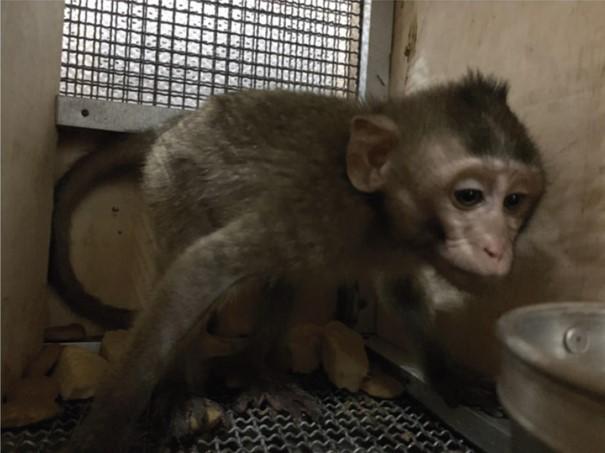
In addition to these conservation impacts, these highly intelligent and socially complex primates endure severe suffering throughout the supply chain, from capture to prolonged confinement, stressful long-distance transport in cramped crates, and invasive laboratory experiments. These conservation and welfare concerns further reinforce the need to deny approval of additional macaque breeding and export facilities.
Socioeconomic Impact
The international scientific community is increasingly shifting toward modern, non-animal research methods—particularly for experiments involving primates. Since 2016 there has been a political agreement in the Netherlands to eventually reduce primate use in research to zero. As a result, continued investment in primate breeding, export, and testing infrastructure will become economically and scientifically unsustainable. While the animal-testing industry may promise short-term economic benefits, these operations routinely externalize their true costs—placing the burden on public health systems, wildlife populations, and local communities rather than delivering lasting benefits.
Conclusion
Taken together, the public-health risks, animal welfare concerns, and environmental harms described above, along with growing public awareness of the ethical and scientific limitations of animal experimentation, create significant reputational risks that could undermine strategic sectors such as tourism and international collaboration.
For these reasons, we respectfully urge you to withhold approval of the proposed Vạn Thành farm and instead support alternatives that are consistent with protecting public health, ethical scientific progress, and biodiversity conservation.
We thank you for your time and consideration and remain available to provide any further information you may require.
Sincerely,
Susan Hartland
Director of Stichting Animal Rights Netherlands & Belgium